Is Huckleberry Finn Racist?

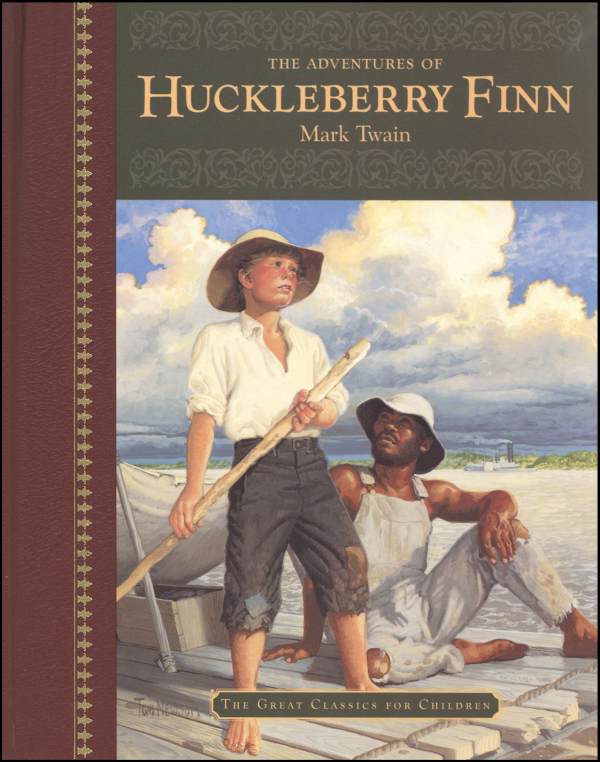
huckfinn-bookcoverAdventures Of Huckleberry Finn (1884) by Mark Twain

“You don’t know about me, without you have read a book by the name of ‘The Adventures of Tom Sawyer,’ but that ain’t no matter. That book was made by Mr. Mark Twain, and he told the truth, mainly. There was things which he stretched, but mainly he told the truth.”

It’s been said that “Literature is the Handmaid of History.” By this statement, the late Mrs. Rosalie Slater meant that literature is a useful tool for teaching and learning history, for seeing how God has worked through the ages in different times and places, and for showing how men thought and acted in those settings. Of course we can see how this applies to works of history and biography, but it is also true of fiction. The writer Henry James defined the novel as a “personal, direct impression of life.” James pointed out that although fictional works are stories of “make-believe,” it is just as much the job of the novelist to convey truth as it is the historian’s. While a fictional story itself may be “made up” and largely a product of the writer’s imagination, it also conveys something about his or her experiences and impressions of life; the characters, ideas, and principles actually exist in the real world. Continue reading “Is Huckleberry Finn Racist?”

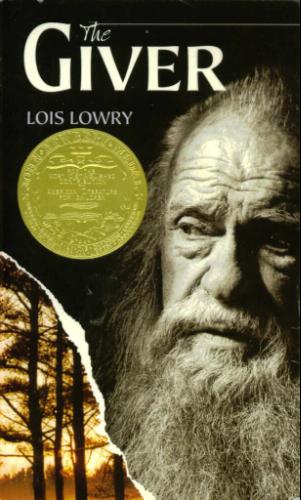
The Making of a Perfect World, Part 2: The Giver

GiverThe Giver by Lois Lowry

“We don’t dare let people make choices of their own…We really have to protect people from wrong choices.”


In my previous article, I talked about Utopia by Sir Thomas More and the concept of utopian societies. Utopia was More’s attempt to critique some of the problems in his society and put forth a challenge for reform, but many of the ideas proposed in his story are far-fetched and impractical. From More’s work, a lot of other utopian and dystopian literature developed and dystopian fiction and films are continually being written.

Dystopia happens to be one of my favorite genres of fiction. So here’s the funny thing: I’m sometimes accused of being a perfectionist by people who know me well, but for some reason, I enjoy reading stories of societies which are far from perfect, even though they were established with that intention. I think I like these stories because as a “perfectionist” I’m also a fixer. If I see something amiss, or something that I think could be improved upon, I just have to jump in and try to remedy the situation. So I can relate to the story characters that see the problems in their culture and are not content to just accept it and go along with society. I also admire characters who are determined to fight evil and injustice, even when it means defying the culture they live in. Continue reading “The Making of a Perfect World, Part 2: The Giver”

The Making of a Perfect World, Part 1: Utopia

Utopia by Sir Thomas More

“The source of happiness is much disputed, among all people, in Utopia.” – Thomas More
 
“They who can give up essential liberty to obtain a little temporary safety deserve neither liberty nor safety.” – Benjamin Franklin


One of my favorite genres of literature is dystopia, but before I talk about dystopian fiction, let’s take a look at its predecessor. Most people are familiar with the term utopia, which originated with the fictional work by Thomas More published in 1516. Utopia was written shortly after the discovery of the New World, an event which stimulated the human imagination and brought with it a sense of new possibilities. It can be considered the first English science fiction, as the story describes an unreal place (located in the New World) which could be real (at least hypothetically) in the future. More’s imaginative society represents an ideal one in which many social problems are controlled or eliminated, such as war, crime and poverty, yet its plans for social improvement are in many ways impractical. Ironically, and significantly, the word utopia can literally be translated as “good place” or “no place,” suggesting that the author acknowledged that there is no such thing as a perfect society. Continue reading “The Making of a Perfect World, Part 1: Utopia”

Aunt Jane’s Marriage Advice to the Young and Romantic

The Novels of Jane Austen

Portrait of Jane Austen, from the memoir by J....
Portrait of Jane Austen, based on a sketch by Cassandra Austen (Photo credit: Wikipedia)
It is a truth universally acknowledged, that a single man in possession of a good fortune must be in want of a wife. However little known the feelings or views of such a man may be on his first entering a neighbourhood, this truth is so well fixed in the minds of the surrounding families, that he is considered as the rightful property of some one or other of their daughters. – Pride and Prejudice


Anybody who knows me knows how much I love Jane Austen, considered by many to be the greatest female writer of the English language. It was just a matter of time before I would feature her on my blog, and since 2013 is the 200th anniversary of the publication of Pride and Prejudice it seems appropriate to do so this year. Pride and Prejudice was my first Austen novel; I read it for the first time about 15 years ago and since then have tried to read one Austen novel every year. I wouldn’t go so far as to say that Pride and Prejudice is a book that I think every Christian should read, but it is one of my all-time favorite books and I do highly recommend it. Rather than review one of Austen’s books in particular, I decided instead to write about the main subject that runs through all of her books – marriage. Continue reading “Aunt Jane’s Marriage Advice to the Young and Romantic”

Living Life in the Moment: Gilead

Gilead by Marilynne Robinson

“We fly forgotten as a dream, certainly, leaving the forgetful world behind us to trample and mar and misplace everything we have ever cared for.”

Gilead is one of those books that I can’t recall how I happened upon – must’ve seen it on a list somewhere and read a review or summary that grabbed my attention, so I put it on my wishlist, and was later fortunate enough to snatch it up for 50 cents at the library bookstore. As I started reading it, I really had no idea what to expect, but right away I was struck with the unique perspective from which it is narrated. This book doesn’t follow an obvious plot-line and there are no chapter divisions. It is written in a rambling, stream-of-consciousness style as the writer records his memories and thoughts as they come to mind.  It’s not one story, but a collection of them. Marilynne Robinson was awarded the Pulitzer Prize for Fiction in 2005 for Gilead, which is loosely based on the life of her own grandfather.

Old Reverend John Ames had his son late in life – in fact, he’s in his mid-70’s, and his boy is only 6 years old. Continue reading “Living Life in the Moment: Gilead”