
Frankenstein, or The Modern Prometheus (1818) by Mary Shelley

“I saw—with shut eyes, but acute mental vision— the pale student of unhallowed arts kneeling beside the thing he had put together. I saw the hideous phantasm of a man stretched out, and then, on the working of some powerful engine, show signs of life and stir with an uneasy, half-vital motion. Frightful must it be, for supremely frightful would be the effect of any human endeavor to mock the stupendous mechanism of the Creator of the world.“
There are a number of themes and ideas that are conveyed in Mary Shelley‘s famous story, Frankenstein. One is the dangers of having an overly ambitious thirst for knowledge and power to the neglect of human relationships. Another is the injustice of judging others based on their outward appearance rather than their heart. But one of the ideas that kept coming to my mind as I read Frankenstein this second time around was how Victor Frankenstein’s dealings and relationship with his creature contrasts with God and how He deals with man as His creature.
Continue reading “Frankenstein: A Contrast in Creators”

 , and I’ve read it several times (and will again!). This romantic, gothic, fictional autobiography portrays a young woman seeking to find a place in society where she can add value to others, as well as be valued herself. From the very start, the reader sympathizes with Jane and admires her courage in difficult circumstances. Abandoned, demoralized and betrayed as a child by those on whom she depends for care and protection, Jane has almost every disadvantage in a society which judges and rewards individuals for their external and superficial qualities, such as social status, wealth and beauty. But Jane does have qualities that serve her well – her wit and intelligence, her courage, and most importantly, her faith. Each situation she faces serves to give her more inner strength and confidence. She knows that while people may fail her, God never will, and He never does.
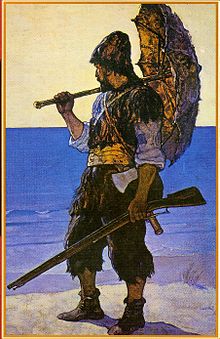
 , published in 1719, was among the first of a genre called realistic fiction. Since fiction writers were not respected at this time, De Foe presented his story in a way that would give it a sense of being a true account. De Foe calls himself the editor of the tale, which is stated to have been originally written by Crusoe himself, so the story is told in first person by Crusoe. He begins relating how, in the pursuit of adventure, he finds himself as the sole survivor after being shipwrecked on an island.
 I'm All Booked